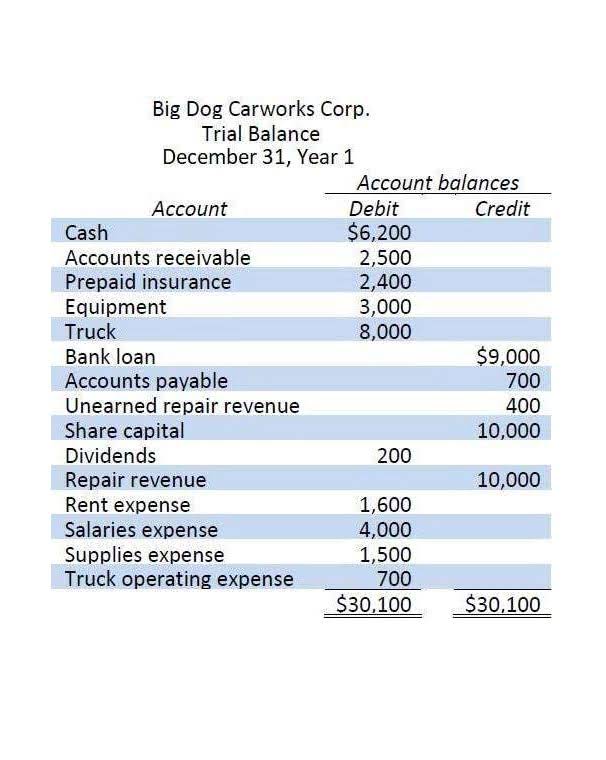
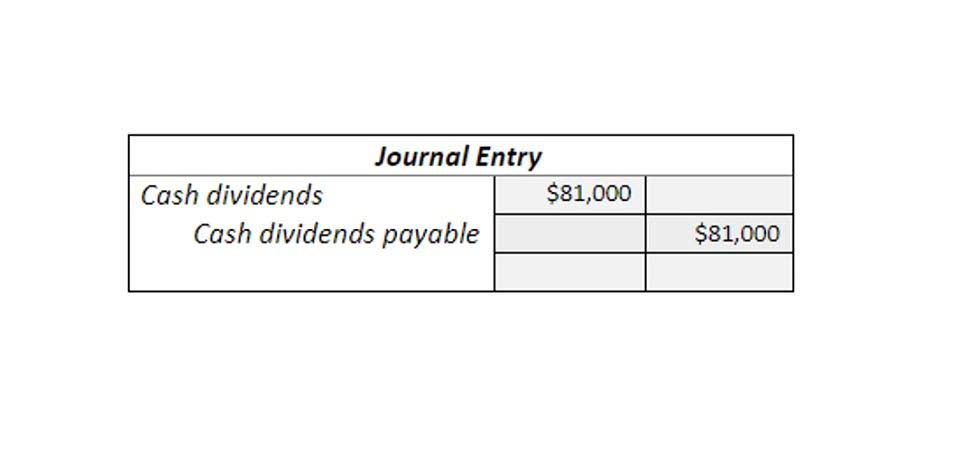
Common examples include insurance premiums, subscriptions, and rent paid in advance. Deferred revenues (also called unearned revenues) occur when customers pay you in advance for products or services you haven’t delivered yet. Since you haven’t earned this revenue, you initially record it as a liability. Adjusting Entries are made after trial balances but before preparing annual financial statements.
Prepaid expense
In this sense, the company owes the customers a good or service and must record the liability in the current period until the goods or services are provided. For deferred revenue, the cash received is usually reported with an unearned revenue account. Unearned revenue is a liability created to record the goods or services owed to customers. When the goods or services are actually delivered at a later time, the revenue is recognized and the liability account can be removed. To do adjusting entries in accounting, you need to identify the accounts to be adjusted, determine the amounts to be adjusted, and record the adjusting entries.
Adjusting Journal Entry
Businesses sometimes fail to properly adjust for prepaid expenses or unearned revenues. Similarly, if prepaid expenses like insurance are not adjusted periodically, the asset will be overstated, and expenses will be understated, leading to an inaccurate portrayal of the company’s financial position. Adjusting entries are made at the end of the accounting period to ensure that the financial statements accurately reflect the financial position of the business. These entries are made to adjust the balances of certain accounts and to record any expenses or revenues that have not yet been recorded. Additionally, in order to maintain consistency and comparability among financial statements, adjusting journal entries are required by IFRS and generally accepted accounting principles (GAAP). Both depreciation and amortization are important aspects of adjusting entries in bookkeeping, as they allow the bookkeeper to accurately reflect the decrease in value of assets over time.
Additional types might include bad debts (or doubtful accounts), and other allowances. Now that we’ve covered the basics, let’s take a look at the five most common types of adjusting entries, and how each might apply to a company’s financial record. Being aware of these common pitfalls can help you maintain more accurate financial records and avoid costly mistakes. Transactions may be recorded in the current period but recognized as revenue in a future accounting period. Adjusting entries can be categorized into several types, each serving a specific purpose in the accounting process. The amount of a long-term asset’s cost that has been allocated to Depreciation Expense since the time that the asset was acquired.
- Adjusting entries can also be made using accounting software; this can help you streamline your accounting process.
- On the other hand, expenses should be recognized when they are incurred, regardless of when payment is made.
- Adjusting entries are accounting journal entries that convert a company’s accounting records to the accrual basis of accounting.
- Prepaid expenses are costs that have been paid in advance, but are not yet incurred.
- Adjusting entries are made at the end of the accounting period to ensure that the financial statements accurately reflect the financial position of the business.
- Before you prepare the financial statements for the month of June 2023, you need to post an adjusting entry as shown below to recognize accrued rent income for the month.
Prepaid expenses are expenses that have been paid in advance but have not yet been incurred. For example, if a company pays for insurance coverage for the next year, the company would record a prepaid expense entry. It involves maintaining accurate records of all financial transactions, including sales, purchases, payments, and receipts. The bookkeeper is responsible for recording these transactions in the accounting records.
For example, a company may have paid $12,000 for insurance coverage for the next year on December 25th. It is important for businesses to choose the accounting method that works best for them. Accrual basis of accounting is recommended for larger businesses with a lot of transactions, while cash accounting is recommended for smaller businesses with fewer transactions. Revenue can be recognized in different ways depending on the type of business and the nature of the transaction. For example, service revenues can be recognized when the service is provided, while product revenues can be recognized when the product is delivered.
Adjusting entries help align revenues and expenses with the correct time periods, providing a clearer picture of a company’s financial health. Without these adjustments, financial statements could be misleading, affecting decision-making by stakeholders. Accountants also use the term “accrual” or state that they must “accrue” when discussing revenues that fit the first scenario. Further the company has the right to the interest earned and will need to list that as an asset on its balance sheet. Prepaid insurance premiums and rent are two common examples of deferred expenses. If the rent is paid in advance for a whole year but recognized on a monthly basis, adjusting entries will be made every month to recognize the portion of prepayment assets consumed in that month.
By properly adjusting entries for prepaid expenses and accrued expenses, bookkeepers can ensure that financial statements reflect the true financial position of the business. Fixed assets are assets that a company owns and uses for a long period of time. In adjusting entries, it is important to ensure that the value of fixed assets is accurately reflected in peculiar features of single entry system in the context of bookkeeping the balance sheet accounts.
Accrued revenue
A review of the balance in Unearned Revenues reveals that the company did indeed receive $1,300 from a customer earlier in December. However, during the month the company provided the customer with $800 of services. Now that all of Paul’s AJEs are made in his accounting system, he can record them on the accounting worksheet and prepare an adjusted trial balance. These are expenses that a company is likely to incur in the future and need to be recognized now. Examples of provisions include bad debt provisions, warranty provisions, and restructuring provisions. Keep on reading to know more about adjusting entries, their benefits, adjusting entries examples, and types.
- Things that are resources owned by a company and which have future economic value that can be measured and can be expressed in dollars.
- Adjusting entries serve as essential tools for accountants to maintain accurate financial records and ensure compliance with generally accepted accounting principles (GAAP).
- Without adjusting entries, financial statements may not accurately represent the financial health of the business, which could lead to poor business decisions and mislead stakeholders.
- At the end of the first month, the business would need to adjust the interest expense by debiting Interest Expense for $208.33 and crediting Interest Payable for $208.33.
- Sometimes, they are also used to correct accounting mistakes or adjust the estimates that were previously made.
What are the main rules for adjusting entries?
Instead, the amount is divided into twelve months and an insurance expense of $200 is recognized as a portion of the prepayment is applied each month. Timely information is essential to every stakeholder that relies on your financial statements to make economic decisions. The time period assumption ensures that accounting information is reported and made available to these stakeholders at regular intervals. Whether your employees are waiting on a commission check, or you owe a client money for materials, these expenses need to be reflected in an adjusting entry. Each year you will use your depreciation adjusting entries to update your balance sheet on the remaining value of the asset as well.
When to Make Adjusting Entries
Most critically, these entries reflect the true financial individual income tax forms health of your business at period-end. Since adjusting entries so frequently involve accruals and deferrals, it is customary to set up these entries as reversing entries. This means that the computer system automatically creates an exactly opposite journal entry at the beginning of the next accounting period. By doing so, the effect of an adjusting entry is eliminated when viewed over two accounting periods. Adjusting entries significantly influence the accuracy and reliability of financial statements, ensuring that they present a true and fair view of a company’s financial position.
The percentage rates that are used in the methods above collect synonym can be based on your company’s historical data related to bad debts. In addition to historical data, you may also utilize industry averages in estimating bad debts. The amount of bad debts are usually estimated by applying a percentage that is determined from bad debt history. Even though you could specifically identify each customer accounts that are uncollectible, doing so could take a lot of time which is the reason why estimating bad debts is the more practical approach.
Without these entries, financial statements would not provide an accurate representation of a company’s financial position. Adjusting entries ensure that revenue and expenses are recognized in the correct accounting period, and that assets and liabilities are accurately recorded. In this article, we will explore the role of adjusting entries in the accounting cycle and discuss the different types of adjusting entries. To ensure that a company’s financial statements accurately reflect the financial position and performance of the business for a specific period, adjusting journal entries are used. Such adjusting entries are made to correct any inaccuracies, omissions, or oversights that may have occurred during the normal bookkeeping process at the end of an accounting period.
Without adjusting entries, the financial statements would not accurately reflect the financial position of the business. There are various types of accounting adjusting entries examples in accounting a few of which are given below. Adjusting entries are accounting journal entries that are to be made at the end of an accounting period. Adjusting entries always involve a balance sheet account (Interest Payable, Prepaid Insurance, Accounts Receivable, etc.) and income statement account (Interest Expense, Insurance Expense, Service Revenues, etc.). Entries are made with the matching principle to match revenue and expenses in the period in which they occur. Adjustments reflected in the journals are carried over to the account ledgers and accounting worksheet in the next accounting cycle.
Put simply, an adjusting entry updates an existing journal entry for a specific accounting period. When something changes, whether that be an asset depreciating, income received months after a transaction, or late payment to a client, your balance sheet will need an adjusting entry to show the change. When you record an accrual, deferral, or estimate journal entry, it usually impacts an asset or liability account. For example, if you accrue an expense, this also increases a liability account. Or, if you defer revenue recognition to a later period, this also increases a liability account.
In adjusting entries, it is important to ensure that the value of liabilities is accurately reflected in the balance sheet accounts. Adjusting entries are made at the end of an accounting period to update accounts and ensure that financial statements reflect accurate information. Understanding bookkeeping and adjusting entries is essential for anyone involved in financial management. Bookkeeping is the process of recording and classifying financial transactions, while adjusting entries are made to update accounts for transactions that have occurred but have not yet been recorded. Because prepayments are considered assets, the initial journal entry of your purchase would debit the asset, and credit the amount paid.